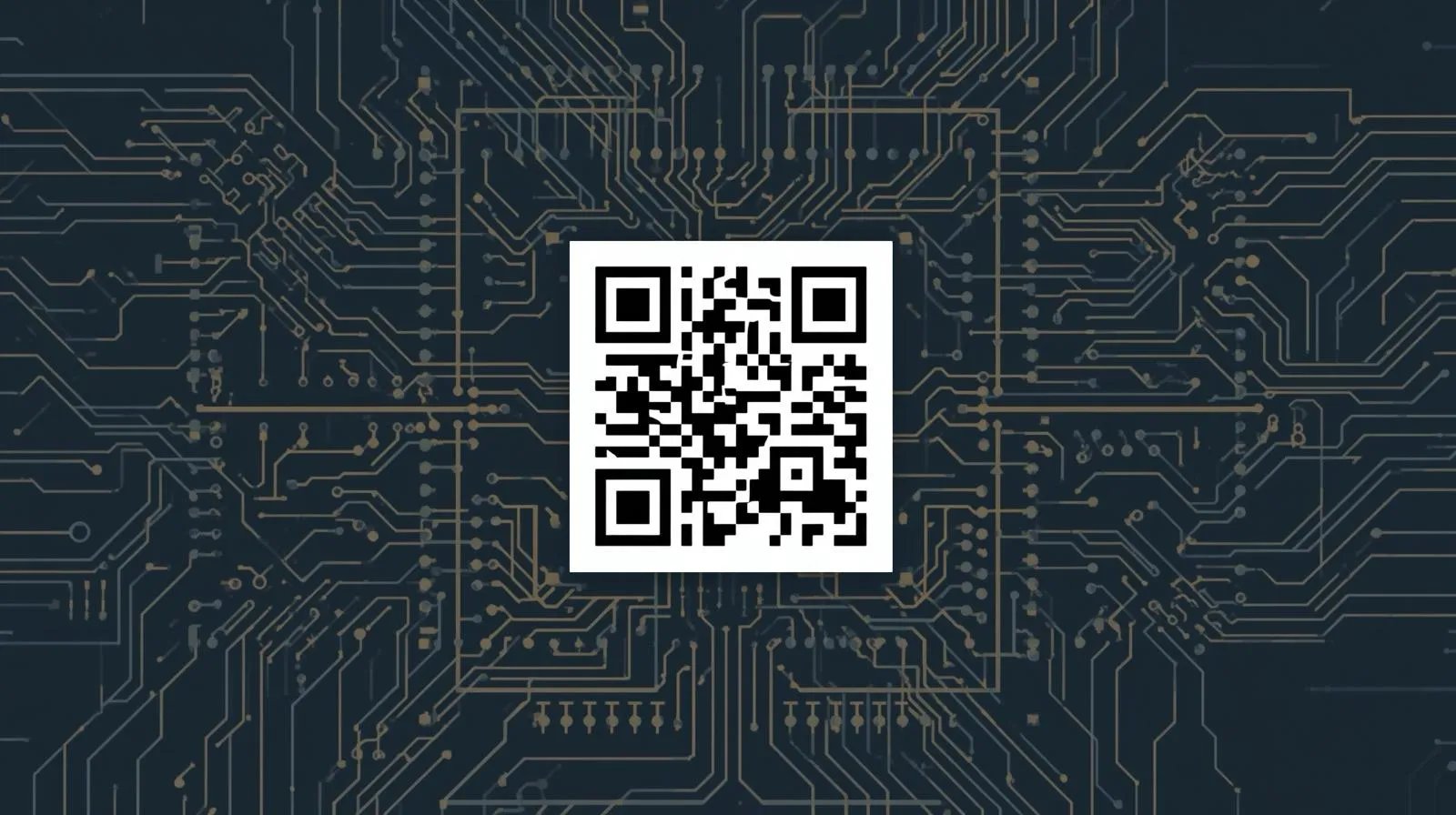
History of QR Codes
QR codes (Quick Response codes) were created to solve a practical problem: how to store more data than a traditional barcode, and read it faster. The technology has since evolved into one of the most recognizable tools for linking the physical world to digital experiences.
The Origin (1994)
In 1994, Denso Wave (a subsidiary of Toyota) created the QR code to track automotive parts during manufacturing and assembly. At the time, the automotive industry was grappling with a critical supply chain challenge: traditional 1D barcodes could only store limited data (about 20 alphanumeric characters) and required precise 0-degree scanning angles, making them inefficient for fast-paced factory environments.
The team, led by Hara Masahiro, developed an innovative 2D matrix barcode system that stored data both horizontally and vertically in a compact, square grid. This design decision was revolutionary for several reasons:
- Higher Data Capacity: QR codes could encode up to 7,089 numeric characters or 4,296 alphanumeric characters, compared to barcodes’ 20-25 characters
- Faster Scanning: The distinctive position detection patterns (the three black-and-white squares) allowed scanners to read the code at any orientation—0, 90, 180, or 270 degrees
- Built-in Error Correction: Using Reed-Solomon error correction, QR codes could be read even if 30% of the code was damaged or obscured
- Compact Size: The 2D format meant more information could fit into a smaller physical space
Denso Wave patented the QR code technology but made the decision to keep the patents open for commercial use, which proved instrumental in its global adoption. This strategic move accelerated development and prevented patent wars that could have stunted the technology’s growth.
Early Adoption (1995–2005)
The first major use of QR codes was in manufacturing and logistics. Factories across Japan rapidly adopted QR codes to reduce errors in parts tracking, speed up inventory management, and maintain supply chain synchronization. Toyota’s internal supply chain became a showcase for QR code efficiency, demonstrating measurable improvements in:
- Scan Speed: QR codes reduced scanning time from 3-5 seconds per barcode to under 1 second
- Error Reduction: Fewer misreads meant improved inventory accuracy and fewer costly assembly mistakes
- Warehouse Efficiency: The ability to scan from multiple angles meant workers could read codes faster without careful positioning
During this period, QR codes remained primarily confined to industrial settings in Asia. However, the technology’s reliability and the open patent policy attracted attention from other industries. By the early 2000s, companies began exploring QR codes for purposes beyond manufacturing.
The Mobile Revolution (2005–2010)
The pivotal moment for QR codes came with the rise of camera-equipped mobile phones. When smartphones like the iPhone (2007) and Android devices became mainstream, QR codes suddenly had a universal scanning tool—the camera everyone carried in their pocket.
This era saw several critical developments:
- Free Reader Apps: Software companies developed free QR code reader applications, democratizing access to scanning technology
- Marketing Adoption: Brands began experimenting with QR codes in advertising, linking print materials directly to websites, videos, and promotional content
- Mobile Payment Exploration: Early adoption in Japan and South Korea demonstrated QR codes’ potential for mobile commerce and payments
- Dynamic QR Codes: Companies created URLs that redirected to specific landing pages, tracking campaign effectiveness in real-time
By 2010, QR codes had transitioned from a niche industrial tool to a recognized marketing channel, particularly in Asia and Europe. However, consumer familiarity remained limited in some regions, and usage varied significantly by country and industry.
Global Expansion (2010–2019)
As smartphone penetration increased worldwide, QR codes transitioned from a curiosity to a practical tool across multiple sectors:
Retail and Ticketing: Major retailers integrated QR codes into loyalty programs and receipts. Event venues used QR codes for ticketing, reducing counterfeiting and streamlining entry processes. Airlines began adopting QR codes for mobile boarding passes.
Payment Systems: Japan, South Korea, and China led the charge with QR code-based mobile payment systems (WeChat Pay, Alipay). This demonstrated that QR codes could serve as a secure payment method when properly encrypted.
Advertising and Analytics: The marketing industry embraced QR codes with sophisticated tracking. Marketers could now create campaigns that directly measured engagement by tracking QR scans, device types, timestamps, and geographic data.
Integration with Other Technologies: QR codes began appearing in academic research, government documents, and healthcare records. Their simplicity made them ideal for bridging gaps between paper-based and digital systems.
However, adoption remained uneven. Western markets were slower to embrace QR codes compared to Asia, partly due to cultural differences in mobile payment adoption and lingering concerns about security and user awareness.
The Pandemic Era (2020–2021)
The COVID-19 pandemic created an unexpected surge in QR code adoption. Contactless interactions became essential, and QR codes provided a simple, safe alternative to physical touchpoints:
- Restaurant Menus: Establishments replaced physical menus with QR codes linking to digital menus, reducing cleaning costs and allowing real-time updates
- Contact Tracing: Venues used QR code check-ins to track potential COVID-19 exposure and comply with public health regulations
- Vaccination Records: Some countries implemented QR codes for vaccine verification and travel documentation
- Payments: Contactless payment via QR codes accelerated adoption, particularly in regions previously resistant to the technology
- Delivery Services: Food and package delivery services prominently featured QR codes for no-contact verification
This period fundamentally changed public perception. QR codes transformed from a marketing novelty to an essential tool for everyday operations. Elderly populations, previously unfamiliar with the technology, quickly adapted out of necessity.
Today and Beyond (2022–Present)
Modern QR codes have evolved beyond their original function, becoming increasingly sophisticated while remaining fundamentally simple:
Design and Branding: QR codes now support custom colors, logos in the center (using error correction redundancy), and artistic designs. Brands can create visually distinctive codes that maintain scannability while enhancing brand recognition.
Advanced Applications:
- Authentication: Two-factor authentication and passwordless login systems leverage QR codes
- Supply Chain Transparency: From farm to table, QR codes track product origins and authenticity
- IoT Integration: Smart home devices, industrial equipment, and connected devices use QR codes for setup and pairing
- Social Commerce: Social media platforms have integrated QR codes for direct product purchasing
- Augmented Reality: QR codes serve as triggers for AR experiences, blending physical and digital worlds
Enhanced Security:
- Encrypted QR Codes: Military and government use encrypted QR codes for secure communications
- Blockchain Integration: Some applications link QR codes to blockchain records for immutable verification
- Anti-Counterfeiting: Brands use unique QR codes as part of multi-factor authentication for product authenticity
Statistics and Adoption: Recent surveys indicate over 90% of smartphone users have scanned a QR code, and global QR code usage continues to grow exponentially. Post-pandemic, contactless transactions via QR codes remain preferred in many regions.
Standards Evolution: The original ISO/IEC 18004 standard continues to evolve, with new versions supporting larger data capacities and additional features while maintaining backward compatibility.
Lessons from QR Code History
The remarkable journey of QR codes demonstrates several principles:
- Open Standards Foster Innovation: Denso Wave’s decision to keep patents open enabled global adoption and prevented competitive fragmentation
- Technology Adoption Requires the Right Conditions: QR codes existed for years before widespread adoption, which required both user-friendly devices (smartphones) and practical incentives (pandemic, mobile payments)
- Simple Solutions Scale: Despite competition from more complex technologies, QR codes remain popular because of their simplicity, reliability, and ease of implementation
- Cultural Context Matters: Different regions adopted QR codes at different rates based on existing mobile payment infrastructure and consumer comfort with technology
From a warehouse solution in 1994 to a ubiquitous bridge between physical and digital worlds today, QR codes represent a remarkable example of how practical innovation can transcend its original purpose and become integral to modern life.